Product
Three products. One pipeline.
Screener reads every application against your criteria, and talks to every candidate before it judges one. The AI Interviewer then runs a structured interview that still follows the answer it just heard. And if you want a traditional coding round as well, that is covered too. The decision at the end stays with your team.
Screen
Screener
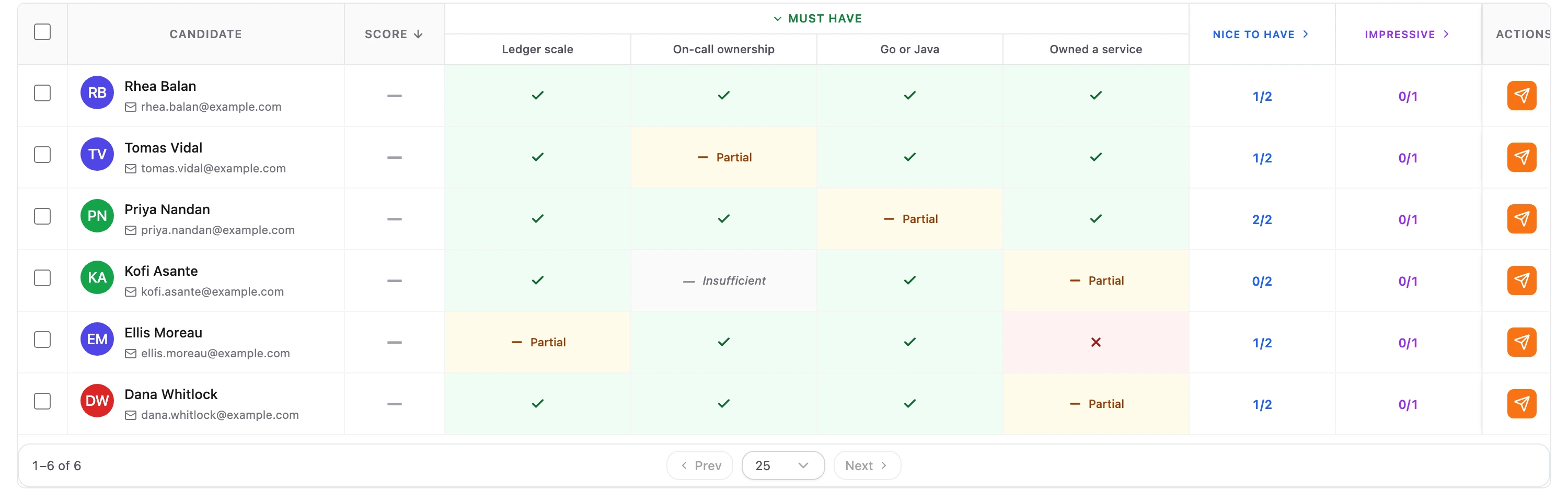
Every application read against the tiers you set — must have, nice to have, would impress — with the reasoning left where you can check it.
A capped, fifteen-question conversation, run against the plan without reading it aloud so nobody can answer straight to the rubric.
Each requirement is answered on its own — met, partly met, or not evidenced — from the resume and the conversation together, and each answer carries the words that produced it.
Where the call and the resume disagree, the call wins — a conversation can be probed and a resume cannot.
A topic the call never reached counts as evidence missing, not as evidence against. Dropping off a call cannot quietly become a rejection.
The screen records what it found. It keeps no list of who is in and who is out, because that list is not its to keep.
Interview
AI Interviewer
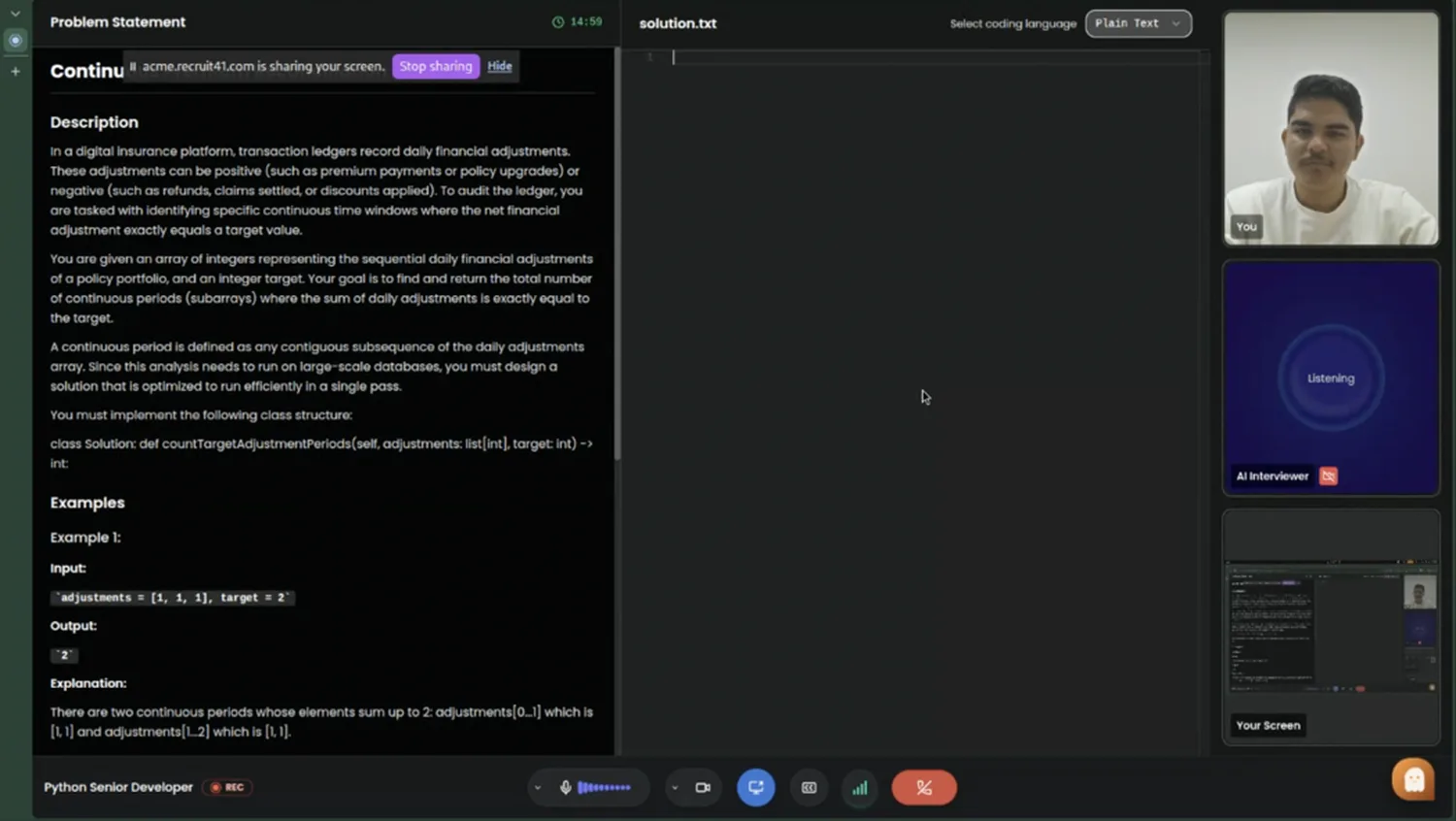
A structured interview that still listens, and a write-up you can check against what was actually said.
Each section is run as a conversation rather than a script, so it follows up on the answer it just heard instead of reading the next question.
The same sections, the same criteria, the same bar — which is the only thing that makes two candidates comparable afterwards.
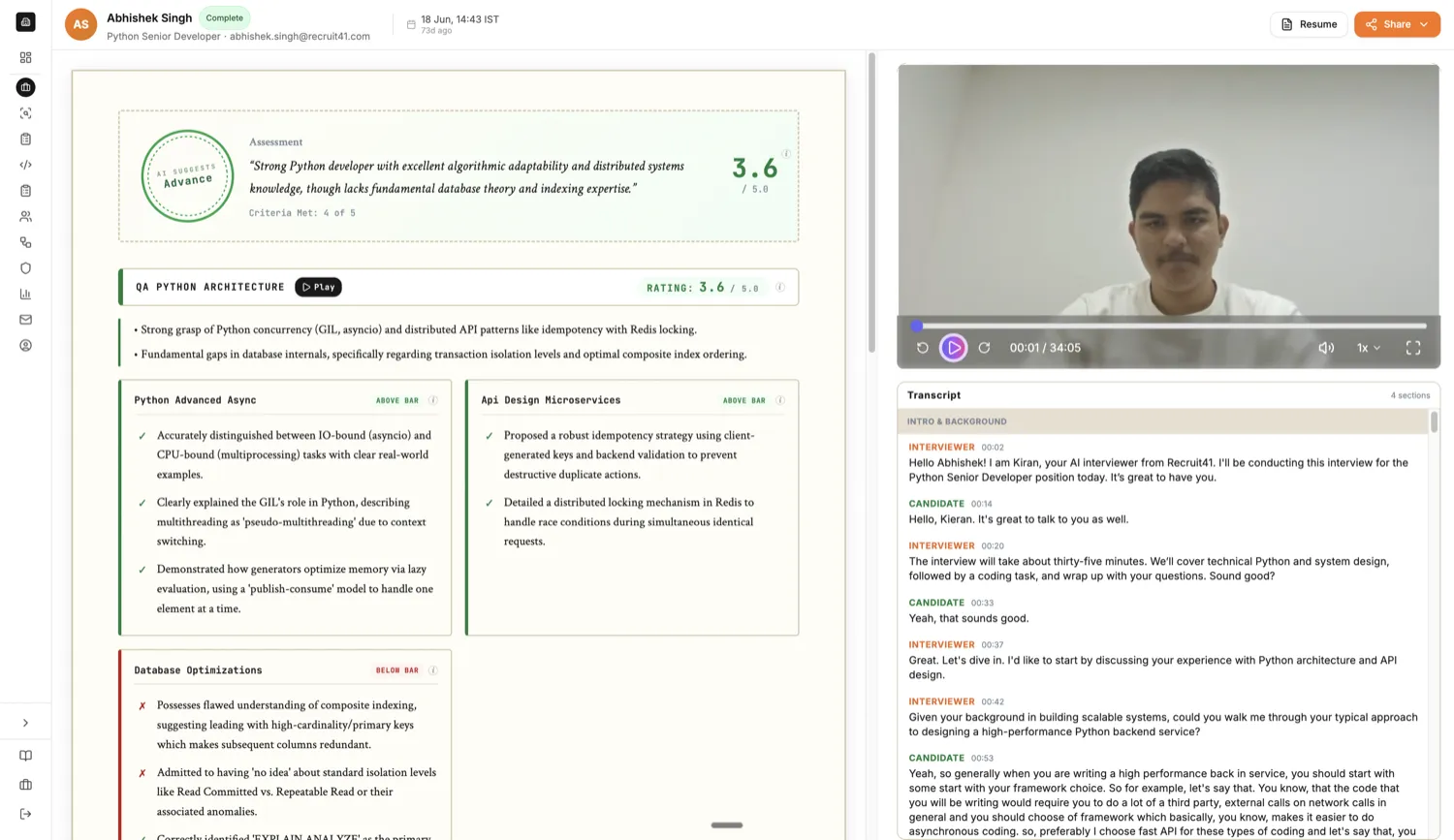
The write-up points back into the recording, so a judgement can be checked against what was actually said rather than taken on trust.
The verdict arrives marked for review, never as settled. A named person confirms it, and from that moment no automated pass can overwrite it.
Also
Still want a traditional coding round?
That is covered too. A take-home that scores the same way twice, sat in a room you can vouch for.
The round is scaled to what the posting actually describes — and where a posting is too thin to read, it asks for a better one instead of inventing a level.
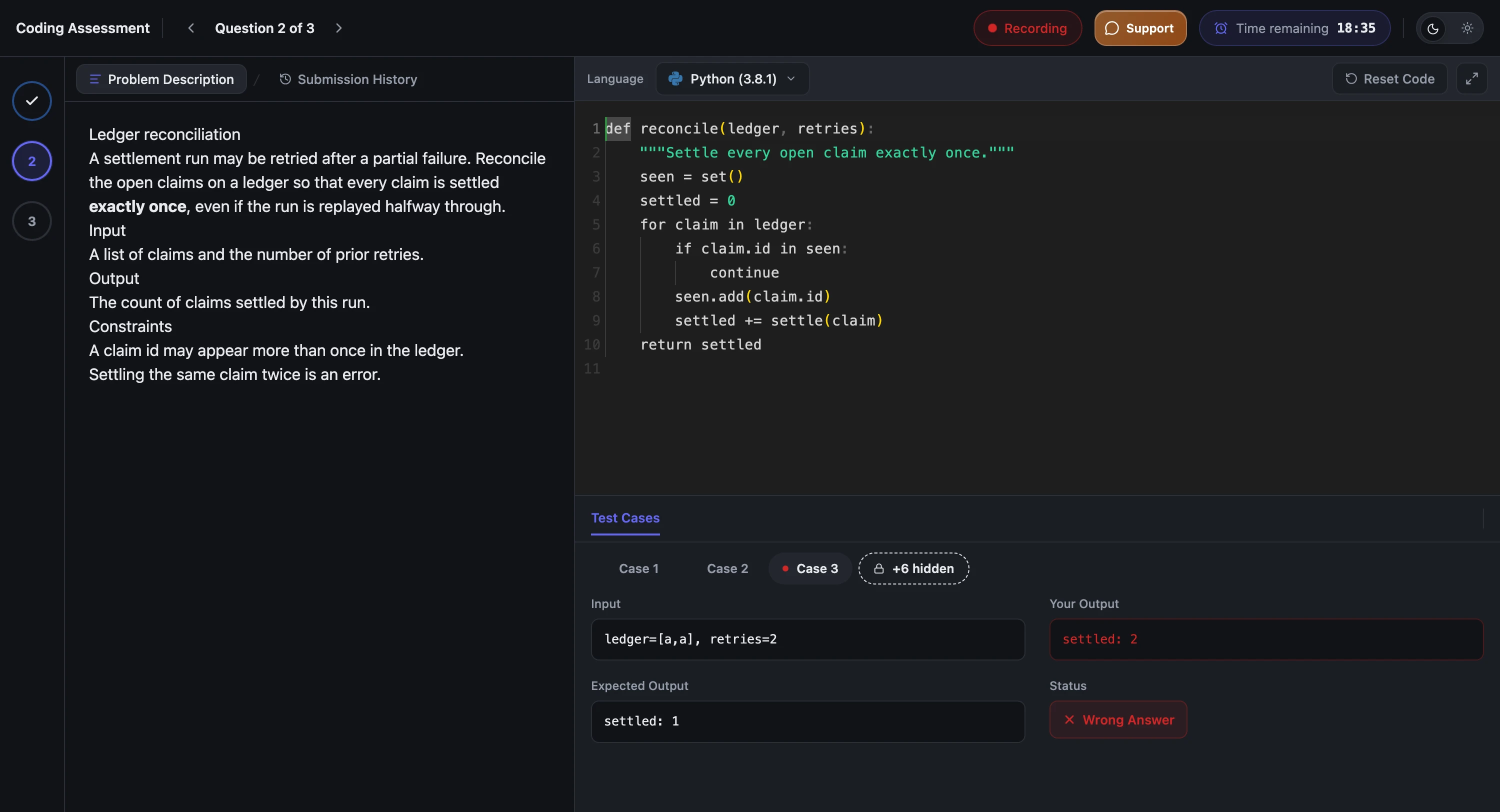
The score is the share of test cases that pass, from a real run of the code. The same submission scores the same twice.
The editor does not accept pasted code, and the room is watched. What you are reading afterwards is what the candidate actually wrote.
An answer that was written but never submitted is still marked from its last save, because running out of time is not the same as not knowing.